
AI in HR: Transforming Talent Management with Intelligent Technology
What is AI in HR?
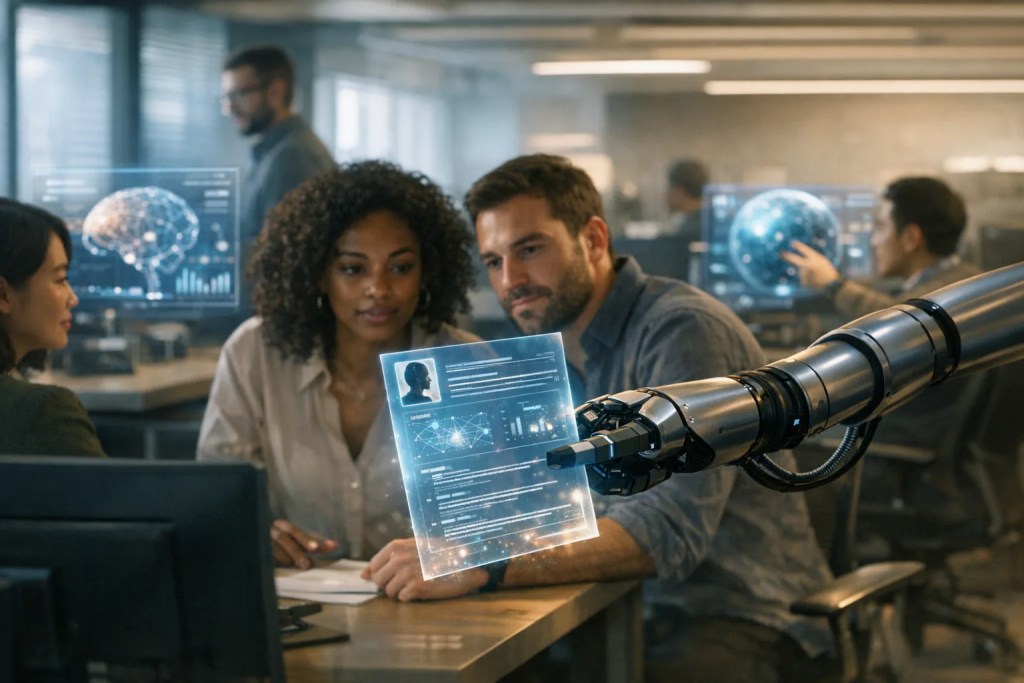
AI in HR means letting intelligent algorithms do the heavy lifting of people work—anything from scanning resumes to predicting turnover. It’s not sci‑fi; it’s the software you already use in recruiting high‑volume roles, only smarter. In the first 90 days you’ll see faster decisions and fewer manual chores.
Core Applications of AI in HR
Recruiting & Candidate Sourcing
Imagine an AI recruitment engine—such as SmartScreen™—that reads 10,000 CVs in minutes, assigns an AI score, and flags the top 5% for your hiring manager. Chatbots answer candidate questions 24/7, and automated text emails keep the pipeline moving. Companies like Unilever cut time‑to‑hire by 30% using talent acquisition automation.
Onboarding Automation
Now new hires get a personalized portal that walks them through paperwork, compliance videos, and team introductions without a human tapping every button. The system even nudges mentors when a task isn’t completed, slashing early‑stage attrition.
Performance Management & Reviews
AI crunches quarterly metrics, blends them with peer sentiment, and surfaces actionable insights. Managers see real‑time dashboards instead of waiting for a year‑end spreadsheet, making coaching conversations more data‑driven.
Employee Engagement & Retention
Sentiment analysis scans pulse surveys and flags rising discontent before it blows up. Predictive analytics—such as SmartTenure™—forecast turnover hotspots, letting you intervene with targeted development or perks.
Learning & Development
Personalized learning pathways recommend courses based on skill gaps and career aspirations. The AI learns which modules boost performance and suggests the next step, keeping growth on autopilot.
Benefits of Using AI in HR
Efficiency jumps—HR teams report up to a 40% reduction in administrative time. Data‑driven decisions replace gut feelings, and cost savings often exceed $200 k per year for midsize firms. Plus, employees enjoy a smoother experience from interview to promotion.
Risks and Ethical Considerations
Bias can creep in if your training data mirrors past hiring flaws. Protect privacy by encrypting candidate info and limiting who sees the AI score. Regular audits and transparent dashboards help you spot and correct unfair patterns.
How to Implement AI in Your HR Department
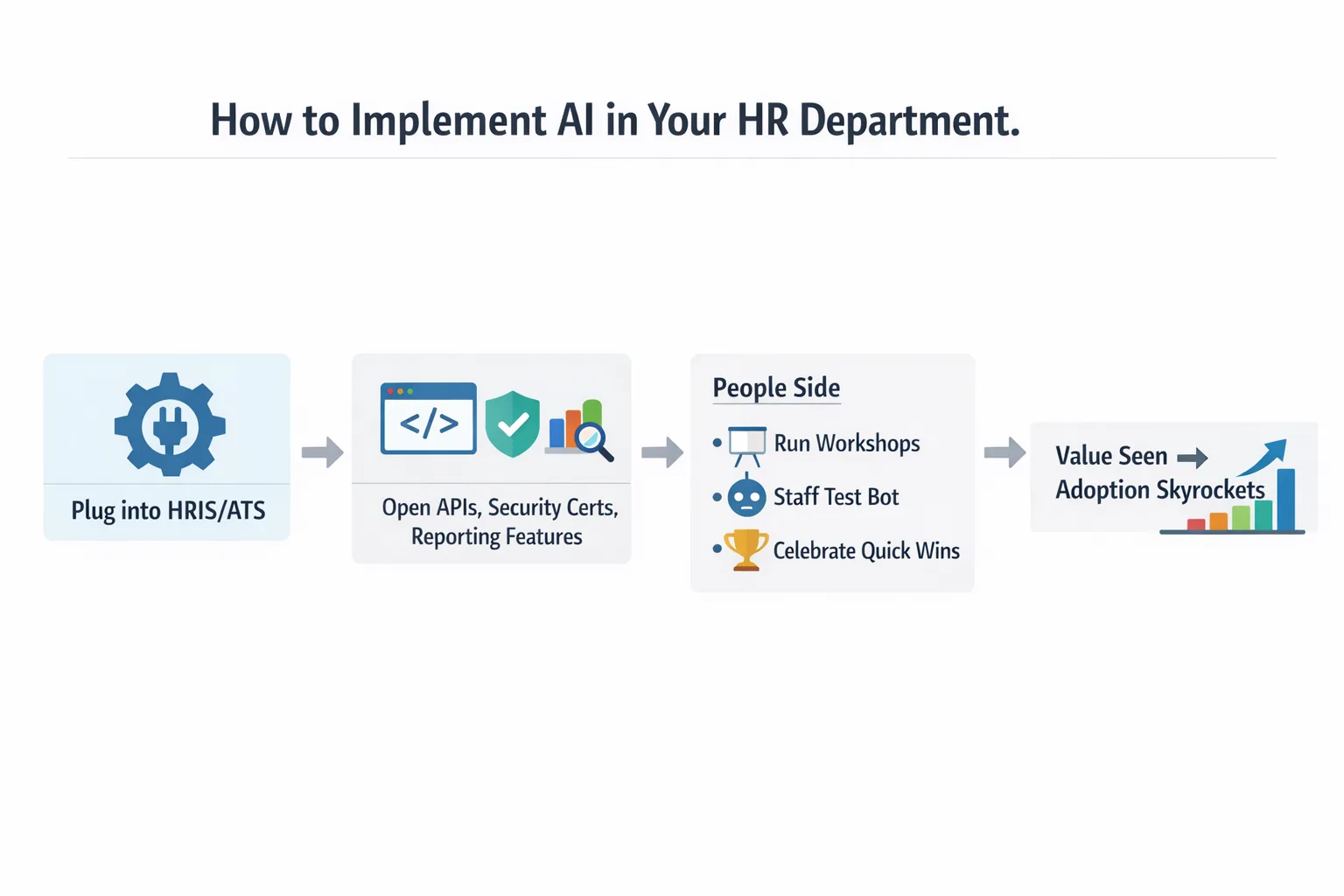
Choose the Right Tools
Start with a platform that plugs into your existing HRIS or ATS. Look for open APIs, proven security certifications, and clear reporting features.
Change Management & Training
And don’t forget the people side—run workshops, let staff test the new bot, and celebrate quick wins. When users see value, adoption skyrockets.
Measure ROI and Success Metrics
Track time‑to‑fill, cost‑per‑hire, and employee satisfaction scores. A pilot that reduces hiring costs by 15% in six months makes the business case crystal clear.
Real‑World Success Stories
IBM’s Watson AI cut onboarding paperwork time by 50% and boosted new‑hire productivity by 20% in its global tech division. Meanwhile, a European retail chain used AI score‑based screening to increase the diversity of its interview pool by 25%.
Future Trends: What’s Next for AI in HR?
Generative AI will draft personalized job offers, while digital twins simulate workforce scenarios before you commit to a hiring plan. Expect smarter bots, deeper analytics, and a workforce that feels more supported than ever.
In short, AI in HR isn’t a buzzword—it’s a practical toolkit that streamlines recruiting, deepens engagement, and drives measurable ROI. Start small, watch the data, and you’ll soon wonder how you ever managed talent without it.
Frequently Asked Questions
Can AI help reduce bias in hiring?
AI can identify patterns and flag potential bias in job descriptions and screening criteria, helping recruiters make more objective decisions. However, the algorithms must be trained on diverse data and regularly audited to avoid replicating existing prejudices.
What are the most common AI tools used for onboarding?
Chatbots, automated document verification platforms, and personalized learning modules are widely adopted for onboarding. They streamline paperwork, answer new‑hire queries instantly, and tailor training content to individual roles.
How can companies measure ROI from AI‑powered HR solutions?
Track metrics such as time‑to‑fill, cost‑per‑hire, employee turnover rates, and productivity gains after implementation. Comparing these figures to baseline data before AI adoption quantifies financial and operational impact.
What privacy concerns should HR managers consider with AI?
AI systems process personal data, so compliance with regulations like GDPR or CCPA is essential. Employers must ensure data minimization, secure storage, and transparent consent practices to protect employee privacy.
Is AI suitable for small businesses’ HR needs?
Yes, cloud‑based AI platforms offer scalable modules that fit limited budgets and staff sizes. Small firms can start with specific functions such as resume screening or employee pulse surveys and expand as needs grow.

