

Gig Healthcare Workers: Opportunities, Challenges, and the Future of Flexible Medical Staffing
Introduction to Gig Healthcare Workers
When you hear “gig healthcare workers,” you might picture nurses snapping on scrubs at a moment’s notice. That’s the core of it – professionals who pick up shifts, projects, or short‑term contracts through online platforms instead of traditional full‑time roles. I’ve watched this model explode from a niche experiment to a mainstream staffing option in just five years, and the ripple effects are huge for both providers and facilities.
Hospitals, urgent‑care centers, and even home‑health agencies are turning to gig talent to fill gaps faster than ever. If you’re curious about how it all works, stay with me – we’ll break down the platforms, the pay, the pitfalls, and the path forward.
How the Gig Model Works in Healthcare
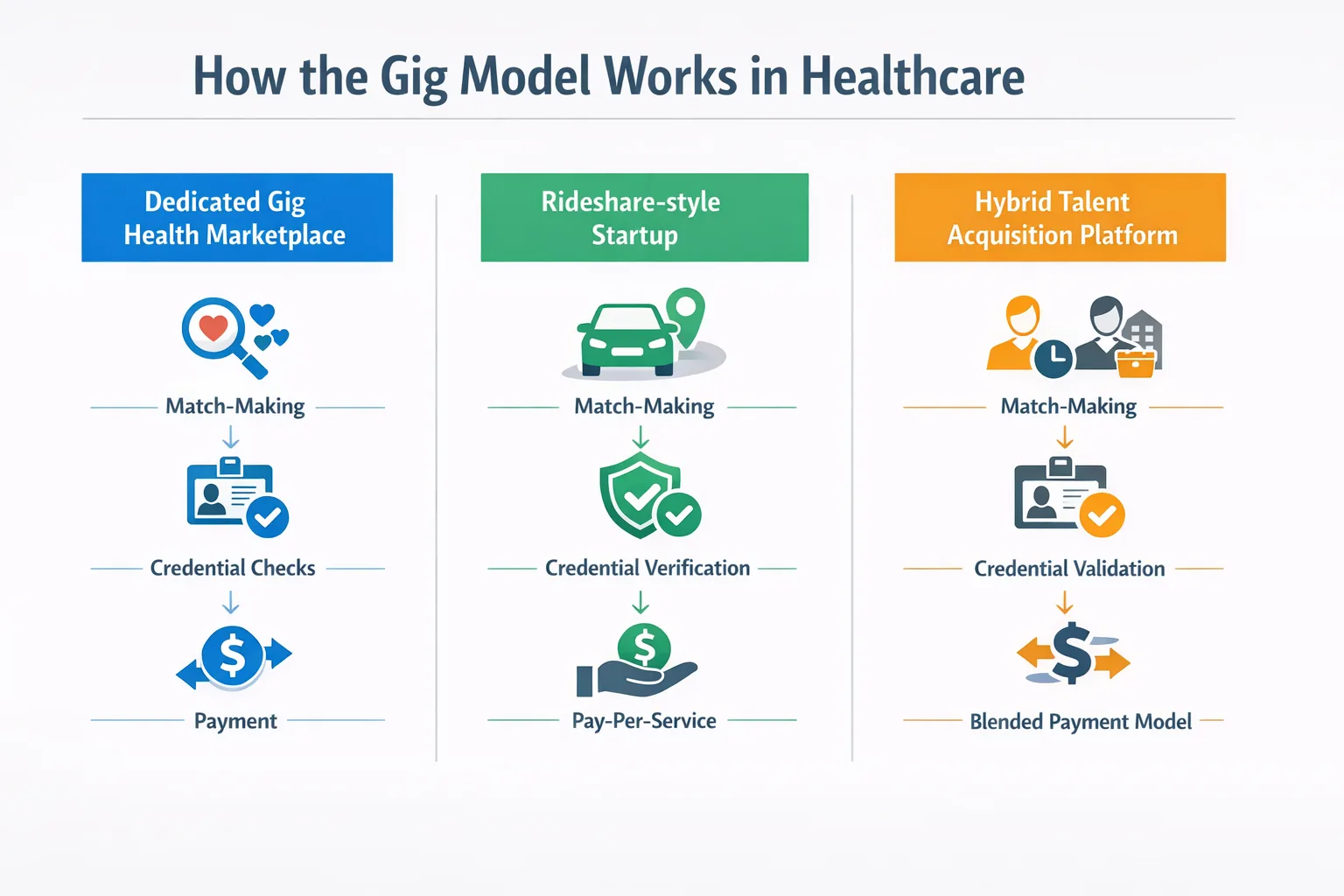
Major Platforms
There are three big players you’ll run across: a dedicated gig health marketplace, a startup that mimics rideshare apps, and a hybrid talent acquisition platform that blends temporary staffing with permanent placement. Each one handles match‑making, credential checks, and payment slightly differently, but they all promise “on‑demand” staffing.
- HealthShift – focuses on nurses and therapists, letting you accept a shift with a single tap.
- ShiftSnap – uses a bidding system where clinicians set their own rate, and facilities pick the best offer.
- MedTalent Hub – offers both gig and temp‑to‑perm options, integrating with existing hospital hiring systems.
Most platforms charge a 10‑15 % fee to the facility, while the worker keeps the full per‑diem rate. Some even add a small bonus for “last‑minute” fills – a nice little incentive when the clock’s ticking.
Typical Gig Roles
Beyond bedside nurses, you’ll find phlebotomists, radiology techs, respiratory therapists, and even mental‑health counselors on these apps. In 2023, roughly 27 % of all gig assignments were for certified nursing assistants, while 19 % went to travel therapists. The variety means you can jump between specialties, which can boost your resume faster than a single‑track job.
Benefits of Gig Work for Healthcare Professionals
Flexibility and Schedule Control
Imagine choosing to work three nights a week, then taking the next two weeks off for a family trip. That level of control is a major draw. You get to build a schedule that fits your life, not the other way around.
And because you’re not tied to one employer, you can test different facilities – a rural clinic today, an urban hospital tomorrow – all without renegotiating a contract.
Earnings Potential and Per‑Diem Pay
Gig rates often outrun salaried equivalents. A Level III ICU nurse might earn $75 per hour on a gig platform, versus $55 hourly on a regular contract. Some clinicians report a 30‑40 % income boost simply by picking higher‑pay shifts and avoiding overtime penalties.
But watch out for the “race to the bottom” on bidding sites – if too many workers undercut each other, rates can dip quickly.
Skill Development and Diverse Experience
Every new assignment adds a line to your résumé. One month you might be administering chemo in a community hospital; the next you’re doing tele‑ICU triage for a national health system. That breadth can make you a more marketable candidate when you eventually decide to settle into a permanent role.
Challenges and Risks
Lack of Benefits and Insurance
Most gig workers are classified as independent contractors, meaning you’re on your own for health insurance, retirement, and paid time off. A 2022 survey found that 68 % of gig nurses had to purchase their own coverage, often at double the cost of group plans.
Now, some platforms are experimenting with “benefit bundles,” but they’re still the exception rather than the rule.
Wage Competition and Bidding Systems
If you’re on a platform that lets you set your own rate, you’ll quickly see a flood of lower‑priced bids. That pressure can erode earnings, especially in saturated markets. It’s a balancing act: set a competitive price without selling yourself short.
Regulatory and Classification Issues
State labor boards are cracking down on mis‑classification. In California, the “ABC” test has forced several gig platforms to re‑classify workers as employees, dramatically shifting cost structures. Keep an eye on local legislation – it can change your status overnight.
Impact on Traditional Staffing and Hospitals
Cost Savings and Staffing Agility
Hospitals love the ability to plug a gap without a lengthy recruiting cycle. A 2021 case study showed a midsize hospital cut its temporary staffing spend by 22 % after integrating a gig platform into its staffing operations.
And because gig workers can be deployed within 24 hours, you avoid costly overtime or patient wait times.
Quality of Care and Continuity Concerns
Continuity is a legitimate worry. When a patient’s primary nurse changes every shift, you risk missed handoffs. Some facilities mitigate this by limiting gig assignments to “float” roles rather than primary care.
Still, data from a national health system indicated a slight uptick in medication errors on units with >30 % gig staffing, underscoring the need for thorough onboarding.
Legal and Compliance Landscape
Independent Contractor vs. Employee Status
There’s no one‑size‑fits‑all answer. Courts look at control, benefits, and the nature of the work. If you’re told exactly how to perform a task, you’re likely an employee. If you set your own hours and bring your own tools, you’re probably a contractor.
State Regulations and Union Opposition
Union groups argue that gig staffing undercuts collective bargaining and depresses wages. In New York, a recent settlement required platforms to contribute to a fund for gig workers’ continuing education. It’s a sign that the legal environment is evolving fast.
Future Trends and Innovations
AI‑Driven Matching and Scheduling
Next‑gen platforms are using machine‑learning algorithms—solutions such as SmartMatch™—to predict shift demand and match it with worker availability, slashing the “time‑to‑fill” metric from an average of 48 hours to under 12 hours.
Hybrid Employment Models
Some hospitals are experimenting with “flex‑full‑time” contracts – you’re on the payroll, get benefits, but still have the freedom to pick up extra gig shifts on the side. It’s a compromise that could satisfy both sides of the debate.
Emerging Benefits Solutions for Gig Workers
Startup BenefitFlex is rolling out portable health plans that follow you from shift to shift, costing about $120 per month. While not a full replacement for employer‑sponsored insurance, it’s a step toward closing the benefits gap.
Case Studies of Successful Gig Workers
Real‑World Stories and Earnings Data
Take Maya, a travel respiratory therapist from Texas. She logged 120 hours of gig work in six months, averaging $85 per hour, and netted $10,200 after platform fees. She used those earnings to fund a certification in pediatric care, opening doors to higher‑pay contracts.
Or Jamal, a radiology tech in Chicago who combined weekday hospital gigs with weekend tele‑radiology. His blended schedule let him earn $70 per hour on-site and $55 per hour remotely, pulling in $8,300 a month – well above the local median salary for his role.
Strategies for Hospitals to Integrate Gig Talent
Onboarding, Credential Verification, and Scheduling Tools
First, set up a digital credentialing system—tools like SmartScreen™—that pulls licenses, certifications, and training records straight from state databases. It cuts verification time from days to minutes.
Second, sync your gig platform with the hospital’s existing talent acquisition platform. That way, you can see gig availability alongside permanent staff schedules, reducing overlap and double‑booking.
Finally, create a “gig liaison” position – a single point of contact who handles contracts, orientation, and feedback. It improves the worker experience and helps you keep quality metrics in check.
Mental Health and Well‑Being Support for Gig Workers
Burnout Prevention and Community Resources
Gig work can feel like a roller‑coaster – high pay followed by downtime that can breed isolation. Encourage workers to join online peer groups, attend virtual debriefs, and use apps that track stress levels.
Some platforms now offer a “well‑being stipend” – a modest $50 per month that you can spend on counseling or fitness classes. It’s a small gesture, but it signals that you care about the person behind the badge.
Conclusion and Takeaways
Gig healthcare workers are reshaping how we think about medical staffing. They bring flexibility, higher earnings, and fresh skill sets, but they also expose gaps in benefits, regulatory certainty, and continuity of care. For clinicians, the key is to weigh the financial upside against the lack of traditional safety nets. For hospitals, the challenge is to blend gig talent into existing staffing operations without compromising quality.
What’s the sweet spot? A hybrid model that offers a base of permanent staff, bolstered by vetted gig professionals who can jump in when demand spikes. Pair that with smart AI matching, robust credentialing, and a genuine focus on worker well‑being, and you’ll have a staffing strategy that’s both agile and compassionate.
Whether you’re exploring nurse hiring, fine‑tuning your healthcare recruitment marketing, or revamping your hospital hiring strategy, keep an eye on the gig ecosystem. It’s not a passing fad – it’s a new chapter in talent acquisition for the medical field.
Frequently Asked Questions
Which platforms are most popular for finding gig healthcare work?
Top platforms include GigHealthcare, ShiftMed, Nomad Health, and CareRev, which operate like Uber‑style apps to match clinicians with short‑term assignments. They typically offer real‑time job listings, credential verification, and built‑in payment processing.
What clinical roles are most commonly offered as gig positions?
The gig model frequently covers registered nurses, licensed practical nurses, radiology and lab technicians, respiratory therapists, and physical/occupational therapists. Some platforms also list specialized roles such as anesthesia assistants and per‑diem physicians.
How does compensation for gig healthcare workers compare to traditional employment?
Gig clinicians often earn higher hourly rates because facilities pay for flexibility and avoid long‑term benefits costs. However, workers must cover their own taxes, insurance, and may experience income variability between assignments.
What legal or insurance challenges do gig healthcare workers face?
Gig workers must maintain up‑to‑date licenses, malpractice coverage, and workers’ compensation, which are not automatically provided by the platform. Misclassification risks can arise if contractors are treated as employees, potentially affecting tax and benefit obligations.
How can hospitals maintain quality and compliance when using gig staff?
Hospitals should verify credentials through the platform’s vetting process, require orientation on facility policies, and monitor performance with regular feedback. Using accredited gig platforms that provide liability coverage helps ensure regulatory compliance.

