

Ultimate Guide to Healthcare Recruitment Software: Features, Benefits & Choosing the Right Solution
Introduction to Healthcare Recruitment Software
When you’re juggling nurses, physicians, and allied staff, a generic applicant tracking system just won’t cut it. That’s why healthcare recruitment software exists – to handle credentialing, shift logistics, and strict compliance all in one place. In this guide I’ll walk you through the must‑have tools, the ROI you can actually see, and how to pick a platform that grows with your organization.
Why the healthcare sector needs a specialized ATS
Hospitals aren’t retail stores. Every hire must meet state licensing rules, meet HIPAA standards, and often start on a night shift within days. A specialized ATS keeps those moving parts synced, so you don’t lose a top surgeon because paperwork got stuck.
Key challenges in medical hiring
- Rapid turnover in nursing units – up to 20% annually in many regions.
- Complex credential verification that can take 2‑4 weeks per candidate.
- Regulatory audits that can cost $50,000 if documentation isn’t airtight.
Core Features Every Healthcare Recruitment Platform Should Have
Credentialing & License Management
Imagine a dashboard that pulls a nurse’s license status from the state board in real time. That’s baseline. A solution such as SmartHire™ flags expirations, sends reminders, and archives every verification – no manual spreadsheets.
HIPAA‑compliant data handling
Patient data isn’t the only thing that must stay private. Candidate health information, background checks, and interview notes are all PHI. Look for end‑to‑end encryption and audit trails that prove you’re staying on the right side of the law.
Integrated Scheduling & Shift Management
When a locum tenens doctor accepts an offer, the system should instantly update the unit’s schedule and notify the staffing coordinator. That cuts the back‑and‑forth that usually eats up a week of admin time.
Automated Compliance & Reporting
One‑click reports that satisfy Joint Commission or CMS requirements are a lifesaver. You can export licensing compliance, diversity metrics, and hiring source ROI in seconds.
Candidate Relationship Management & Talent Pools
Good candidates don’t disappear after a rejection. A built‑in CRM lets you nurture nurses who aren’t a fit today but might be tomorrow, keeping your talent pipeline full.
Interview & Assessment Tools
Tools like SmartScreen™ automate phone interview screening, speeding up the vetting process. Some platforms even let you score clinical scenarios automatically.
Onboarding & Time‑Tracking Integration
When the offer is signed, the software should push data to your HRIS, start a background check, and enroll the new hire in time‑tracking – all without you re‑keying a single field.
Advanced Capabilities Gaining Traction
AI‑driven candidate sourcing & matching
AI recruitment engines scrape nursing boards, LinkedIn, and specialty forums, then rank candidates by fit. It’s not magic, but it shaves hours off every search.
Predictive analytics for turnover and hiring demand
Using historical data, the platform can forecast when a cardiac unit will need three extra RN’s in the next quarter. You can budget proactively instead of playing catch‑up.
Mobile recruiting & candidate app
Shift‑hungry clinicians love apps that let them swipe through openings, upload certificates, and chat with recruiters on the go. A solid mobile experience boosts your acceptance rate by up to 30%.
Benefits of Using Dedicated Healthcare Recruitment Software
Faster time‑to‑fill critical roles
Hospitals that adopted specialized software report a 35% drop in time‑to‑fill for ICU positions – from 45 days down to just 29.
Reduced compliance risk
Automated alerts mean you never miss a license renewal, slashing audit penalties dramatically.
Improved candidate experience
A smooth portal, quick feedback loops, and transparent timelines keep candidates engaged. Happy candidates refer peers, creating a virtuous hiring cycle.
Cost savings and ROI
Consider a medium‑size hospital spending $120,000 a year on manual recruitment. After switching to a platform that costs $70,000 annually, they saved $50,000 in overtime and agency fees – a clear ROI within six months.
How to Choose the Right Solution
Must‑have vs nice‑to‑have features checklist
- Must‑have: License verification, HIPAA compliance, scheduling sync.
- Nice‑to‑have: AI sourcing, mobile app, blockchain credential checks.
Evaluating integration with EHR and payroll systems
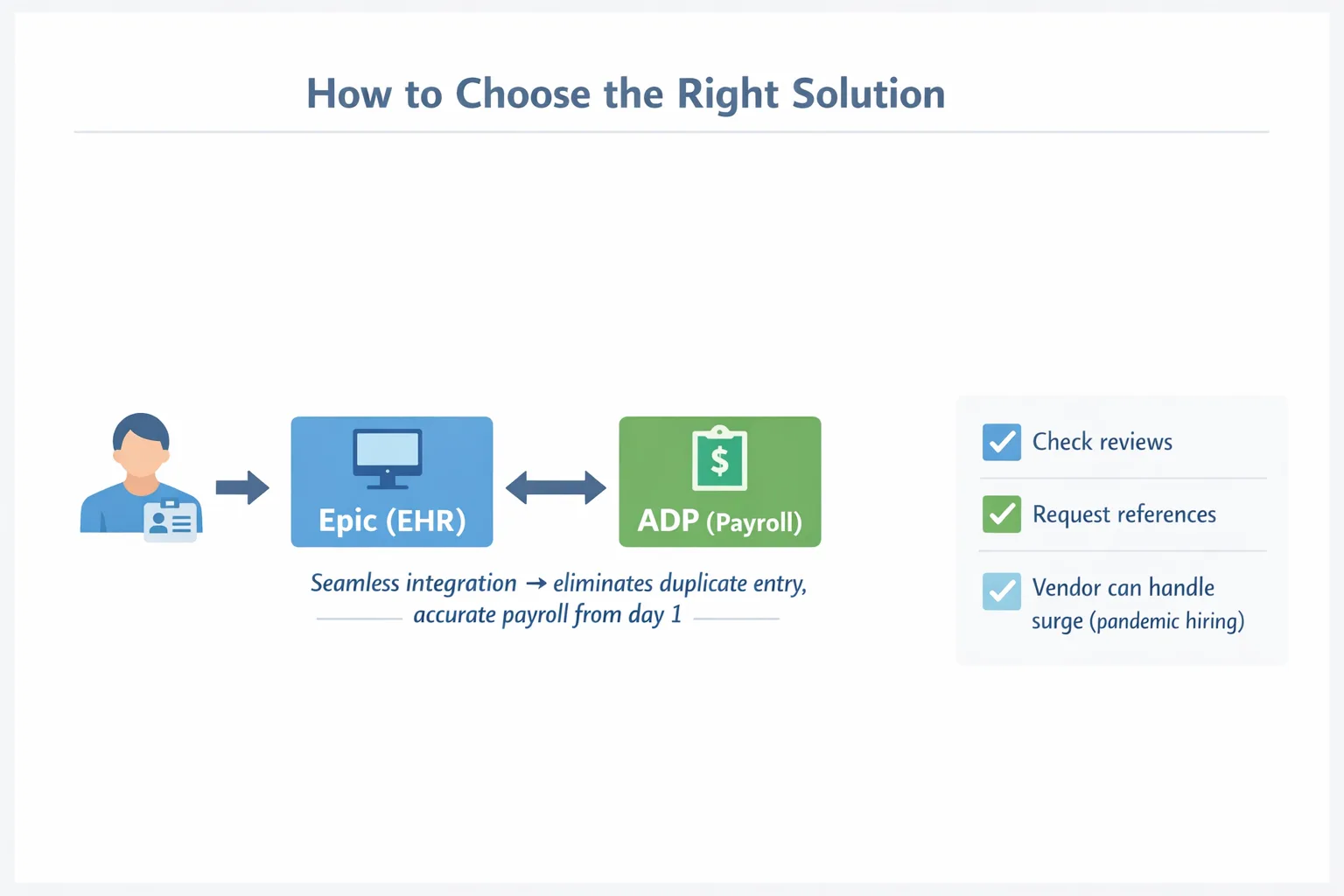
Ask for a demo that shows candidate data flowing into your EHR (like Epic) and payroll (such as ADP). Seamless integration eliminates duplicate entry and keeps payroll accurate from day one.
Vendor reputation, support, and scalability
Check reviews, request references, and make sure the vendor can handle a surge – say a pandemic‑driven hiring spike. 24/7 support isn’t a luxury; it’s a necessity.
Pricing models
Most vendors offer subscription tiers, per‑seat fees, or usage‑based pricing. If you’re a small clinic, a per‑seat model might be cheaper. Large health systems often negotiate enterprise deals that cap cost per hire.
Real‑World Case Study
How a regional hospital cut hiring time by 45% using XYZ software
Riverbend Medical Center struggled with a 60‑day average fill for surgical techs. After implementing XYZ’s healthcare recruitment platform, they automated credential checks and integrated directly with their EMR. Within three months, the average time‑to‑fill dropped to 33 days – a 45% improvement. The hospital also saved $200,000 in agency spend, proving that the right software pays for itself quickly.
Future Trends in Healthcare Recruitment Technology
AI ethics and bias mitigation
As AI recruitment tools become smarter, vendors are adding bias‑detection layers. These flag gender or ethnicity patterns in scoring, letting you adjust algorithms before they influence real hires.
Telehealth workforce hiring platforms
With telehealth booming, new tools match virtual clinicians to remote patient‑care roles, handling licensure across state lines automatically.
Blockchain for credential verification
Imagine a single immutable ledger where a nurse’s license, certifications, and training certificates are stored. Blockchain can eliminate the three‑week verification lag, giving hiring managers instant confidence.
Frequently Asked Questions
Is a generic ATS sufficient for a clinic?
For a small primary‑care office, a basic ATS might work, but you’ll quickly hit roadblocks when you need to track licenses or comply with HIPAA. Specialized software scales more gracefully.
How does HIPAA affect recruitment software?
Any system storing protected health information must encrypt data at rest and in transit, enforce access controls, and produce audit logs. Look for platforms that are explicitly HIPAA‑ready.
What’s the average implementation timeline?
Most vendors need 6‑10 weeks: two weeks for data migration, three weeks for configuration, and a final test phase. Larger health systems may stretch to 4 months, especially if custom EHR integrations are required.
Wrapping Up and Next Steps
Choosing the right healthcare recruitment software isn’t just about ticking boxes; it’s about shaving weeks off hiring cycles, protecting your organization from costly compliance slips, and giving candidates a seamless experience. Use the checklist above, ask vendors for real‑world ROI calculations, and don’t forget to test integration with your EHR and payroll stack.
Ready to see the impact for yourself? Download our free demo checklist and schedule a personalized walkthrough today. Let’s turn hiring headaches into hiring triumphs.
Frequently Asked Questions
How does healthcare recruitment software differ from a generic applicant tracking system?
A specialized healthcare recruiting platform includes features like credential verification, licensure tracking, shift scheduling, and HIPAA‑compliant data handling that generic ATSs usually lack. It also offers built‑in compliance reporting tailored to medical regulations, reducing manual effort for recruiters.
What pricing models are common for healthcare recruitment software?
Most vendors offer subscription‑based pricing, either per user per month or tiered by the number of active requisitions. Some also provide a pay‑as‑you‑go option for smaller facilities, while enterprise packages may include a flat‑fee annual license with optional add‑ons.
How does the software streamline credentialing and license management?
The system automatically pulls licensing data from state boards and verifies expiration dates, sending alerts before credentials lapse. It stores scanned documents securely and creates a searchable audit trail for compliance audits.
Is the data stored by healthcare recruitment platforms HIPAA compliant?
Reputable platforms are built on HIPAA‑compliant infrastructure, using encryption at rest and in transit, role‑based access controls, and audit logs. They also sign Business Associate Agreements (BAAs) with their clients to meet legal requirements.
What should I evaluate when selecting a healthcare recruitment solution for my organization?
Consider integration capabilities with your EHR or HRIS, the depth of compliance features, user‑friendly reporting dashboards, and vendor support. Also assess scalability, data security certifications, and total cost of ownership versus your hiring volume.

