

HR Operations & HR Problems: Common Challenges and Proven Fixes
Introduction – what are HR operations and why problems matter
When you hear the phrase HR operations, HR problems you probably picture endless spreadsheets and frantic emails. In reality, HR operations are the day‑to‑day processes that keep your workforce running smoothly – from hiring and payroll to compliance and employee experience. And when any of those processes stumble, the ripple effect can hit your bottom line faster than you think.
According to a 2023 SHRM survey, 58% of companies report that HR mistakes cost them an average of $4,100 per error. That’s not just a number; it’s a warning sign that unresolved HR problems can drain resources, erode trust, and stunt growth.
Most Common HR Operations Problems
Recruitment & Onboarding Delays
Ever watched a candidate disappear because the offer got stuck in a maze of approvals? That’s a classic recruitment bottleneck. On average, companies lose 30% of top talent when onboarding stretches beyond two weeks. The result? Vacant roles linger, productivity stalls, and morale dips.
Payroll & Workforce Management Errors
Payroll glitches are more than an inconvenience; they can spark lawsuits. One miscalculated overtime line can trigger a $15,000 penalty under the FLSA. And when you add shift swaps and gig workers into the mix, the math gets messy fast.
Compliance & Legal Risks
Compliance isn’t a one‑time checklist – it’s a moving target. From EEOC reporting to GDPR data rules, a single missed filing can cost up to $25,000 in fines. Companies that treat compliance as an afterthought often find themselves scrambling during audits.
Employee Engagement & Communication Gaps
Ask any manager: “Do you know why turnover spikes every quarter?” The answer usually circles back to poor communication. When employees can’t find policies or voice concerns, engagement scores plunge, and turnover climbs by as much as 12%.
Data Management & Reporting Inefficiencies
Imagine pulling together a headcount report that takes three days and still contains errors. Data silos force HR teams to juggle Excel, PDFs, and legacy systems. The result? Decisions based on stale or inaccurate information.
Technology Integration Challenges
Most firms have at least three HR tools – an ATS, a payroll engine, and a basic HRIS. Connecting those islands is easier said than done. Integration failures lead to duplicate entries, lost records, and frustrated users.
Root Causes Behind HR Problems
Lack of Standardized Processes
When every recruiter follows a different recipe for screening, you end up with inconsistent candidate experiences. Standardization is the secret sauce that turns chaos into predictability.
Inadequate Training & Resources
HR staff often wear many hats, yet they receive minimal training on the newest payroll software or compliance updates. That knowledge gap fuels errors and slows response times.
Outdated HR Systems
Legacy systems were built for a world of paper forms and manual calculations. Trying to run a modern, remote workforce on such platforms is like driving a horse‑drawn carriage on a highway.
Poor Cross‑Department Collaboration
Finance, IT, and HR need to chat constantly. When they operate in silos, invoice approvals get delayed, and data integrity suffers. A single miscommunication can cascade into a full‑blown HR problem.
Proven Solutions to Streamline HR Operations
Process Automation & Workflow Tools
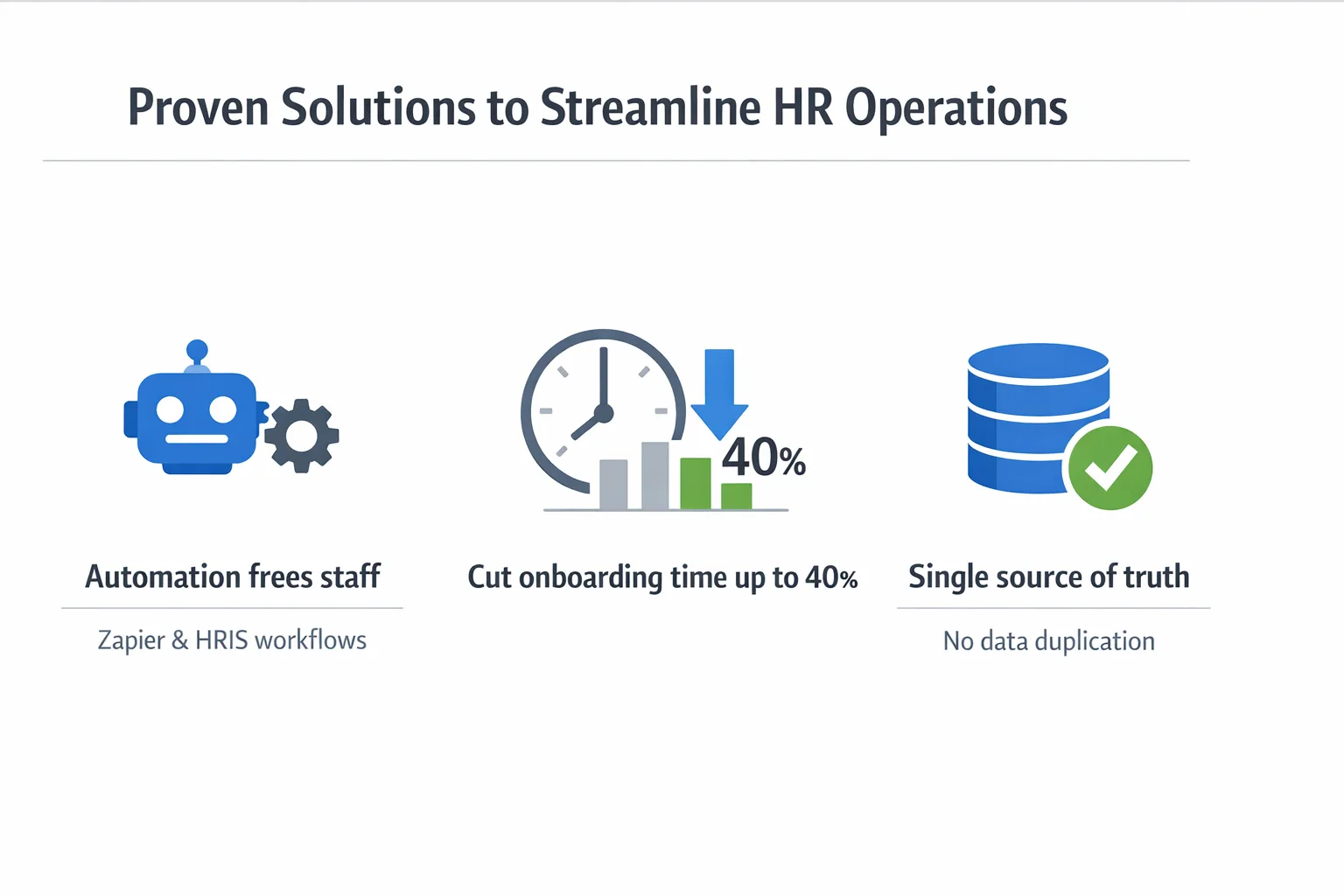
Automation isn’t about replacing people; it’s about freeing them from repetitive tasks. Tools like Zapier or built‑in HRIS workflows can cut onboarding time by up to 40%, letting recruiters focus on talent instead of paperwork.
Centralized HRIS Platforms
A single source of truth eliminates data duplication. Modern HRIS solutions bundle recruitment, payroll, benefits, and performance into one dashboard, slashing reporting cycles from days to minutes.
Continuous Compliance Monitoring
Think of compliance as a health check you run weekly, not an annual panic attack. Real‑time alerts for missed deadlines or policy changes keep you ahead of regulators.
Employee Self‑Service Portals
When employees can update their own details, request time off, or view pay stubs, HR tickets drop dramatically. Companies report a 55% reduction in HR inquiries after launching self‑service.
Data‑Driven HR Metrics
Measuring what matters – turnover cost, time‑to‑fill, payroll accuracy – turns intuition into strategy. A well‑designed HR metrics dashboard can reveal hidden inefficiencies and justify budget requests.
Real‑World Case Studies
Mid‑size Tech Firm Cuts Onboarding Time by 40%
The firm struggled with a three‑week onboarding cycle that caused a 12% drop in new‑hire productivity. By deploying an automated workflow that synced offer letters, equipment requests, and training modules, they shaved 10 days off the process. The result? New hires hit full performance 1.5 months sooner, saving an estimated $250,000 in lost output over a year.
Retail Chain Reduces Payroll Errors by 70% with Automation
A national retailer faced a $1.2 million annual loss due to payroll mismatches across 300 stores. After integrating a cloud‑based payroll system with their time‑tracking hardware, error rates plummeted from 3.5% to just 1%. That translates to $840,000 saved and a happier workforce that trusts its paycheck.
Future‑Proofing HR Operations
Leveraging AI for Predictive Workforce Planning
AI isn’t sci‑fi fluff – it can forecast hiring needs based on seasonal sales trends and turnover patterns. Early adopters have seen a 25% improvement in forecast accuracy, meaning they staff right and avoid costly over‑ or under‑hiring.
Building a Culture of Continuous Improvement
Future‑proof HR means never settling. Regular “process retrospectives,” where teams review what worked and what didn’t, create a feedback loop that keeps operations lean. It’s the same habit that top tech firms use to iterate products.
Quick Action Checklist
Ready to tackle your HR problems today? Grab this checklist, print it, and start crossing items off.
- Map out your core HR processes. Identify steps that take longer than 48 hours.
- Audit your technology stack. Flag any system older than five years.
- Implement a basic automation rule. E.g., auto‑send offer letters once approvals are complete.
- Launch a pilot self‑service portal. Start with simple tasks like address updates.
- Set up a compliance calendar. Add quarterly reminders for EEOC, FLSA, and GDPR checks.
- Choose one HR metric to track. Time‑to‑fill or payroll accuracy are good starters.
- Schedule a cross‑department sync. Bring Finance, IT, and HR together for a 30‑minute huddle each month.
And remember, small wins add up. Each tweak you make today creates a sturdier foundation for tomorrow’s growth.
Bottom line: HR operations, HR problems are inevitable, but they don’t have to be crippling. By pinpointing root causes, embracing automation, and looking ahead with AI and continuous improvement, you can transform headaches into competitive advantage. Start with the quick‑action checklist, measure your progress, and watch your HR function evolve from a cost center into a strategic engine.
Frequently Asked Questions
How can I reduce recruitment and onboarding delays in my organization?
Standardize the hiring workflow with clear timelines, checklists, and automated interview scheduling. Use an applicant tracking system to keep candidates moving through stages and provide new hires with a digital onboarding portal that delivers paperwork and training before day one.
What steps can I take to prevent payroll and workforce management errors?
Implement a single, integrated payroll platform that syncs with time‑tracking and HRIS data to eliminate manual entry. Conduct quarterly audits, set up approval hierarchies, and provide regular training on wage regulations and overtime rules.
How do I stay compliant with changing employment laws and avoid legal risks?
Subscribe to a reputable compliance service that alerts you to federal, state, and local updates. Map each regulation to internal policies, assign a compliance owner, and run semi‑annual reviews to close gaps before they become violations.
What are effective ways to improve employee engagement and communication?
Create regular, two‑way feedback loops such as pulse surveys and town‑hall meetings, and act on the results promptly. Pair digital collaboration tools with clear communication guidelines so employees know how and when to share updates.
Which tools and best practices help streamline HR data management and reporting?
Adopt a cloud‑based HRIS that centralizes employee records, integrates with payroll and performance modules, and offers real‑time dashboards. Establish data governance policies—including access controls, data validation rules, and scheduled backups—to ensure accuracy and security.

