

HR Tech Innovation: Transforming the Workforce with AI, Analytics & Automation
Introduction to HR Tech Innovation
Why innovation matters in modern HR
Every HR leader feels the pressure to keep pace with rapid digital transformation HR trends. Without fresh tools, you risk falling behind rivals who are already automating routine tasks and mining data for insight. Is your team still juggling spreadsheets for payroll? If the answer is yes, you’ve already spotted the first opportunity for improvement.
Core drivers digital transformation AI employee expectations
Three forces are pulling HR into the future. First, AI and machine learning are cracking open data that used to sit idle in recruiting systems. Second, employees now expect self‑service portals that work on a phone as well as a laptop. Third, the broader business push for a cloud‑first strategy means every function must talk to each other without manual hand‑offs.
AI & Automation in HR
Recruiting bots and candidate screening
Imagine a bot that can read 200 résumés in the time it takes a recruiter to sip a coffee. That’s what many HR tech platforms are delivering today. Companies like HireVue report a 30% reduction in time‑to‑fill because the AI flags the top 10% of applicants within minutes.
And the technology isn’t just speed; it adds consistency. Tools like SmartScreen™ apply the same scoring rubric to every candidate, cutting unconscious bias in the early stage.
Intelligent workforce scheduling & payroll
Workforce automation tools now blend scheduling with payroll calculations. A retailer in Texas saw a 12% drop in overtime costs after deploying a scheduling engine that matches shift demand with real‑time labor budgets.
Now payroll runs automatically after each shift, and errors that used to cost $5,000 a month in corrections disappear.
Chatbots for employee self‑service
Chatbots answer 70% of routine HR queries without human assistance. From “How many vacation days do I have left?” to “What’s the status of my benefits enrollment?” employees get instant replies, freeing the HR desk for strategic work.
But you have to train the bot with the right tone—otherwise it feels like talking to a cold FAQ page.
Advanced HR Analytics & People Metrics
Predictive talent analytics
Predictive models, such as SmartTenure™, can flag which new hires are likely to leave within six months. One tech firm used a 0.78‑score model to target retention interventions, cutting early turnover by 22%.
And you don’t need a data science PhD. Many platforms ship pre‑built models that plug into your existing HRIS.
Real‑time dashboards for decision‑making
Live dashboards give you a pulse on hiring funnel health, diversity ratios, and engagement scores. With a glance, you can see if a digital hiring campaign is underperforming in a particular region.
So you can reallocate budget on the fly instead of waiting for a quarterly report.
Measuring ROI of HR tech
ROI isn’t just a buzzword; it’s a concrete figure you can track. Take a company that invested $150,000 in an AI recruiting suite and saved $400,000 in agency fees and time‑to‑hire costs within the first year. That’s a 167% return.
Benchmarks from the Society for Human Resource Management (SHRM) suggest a typical HR tech ROI of 120% to 300% after 18 months.
Cloud‑Based Self‑Service Platforms
Employee portals and mobile access
The modern employee portal feels like a consumer app—intuitive, fast, and always on mobile. A global consulting firm reported a 45% jump in portal usage after launching a responsive design.
And because it lives in the cloud, updates roll out instantly without IT bottlenecks.
Integrated learning & development hubs
Learning hubs now recommend courses based on your role, skill gaps, and career goals. When a data analyst completes a Python module, the system suggests a visualization certification next.
But you must tie those suggestions to tangible outcomes, like a promotion or salary bump, otherwise employees will ignore them.
Integrated Payroll Time‑Tracking & Benefits Management
Seamless data flow across systems
When payroll, time‑tracking, and benefits talk to each other in real time, you eliminate duplicate entry. A midsize manufacturer cut admin hours by 28% after moving to an integrated suite.
Now a single clock‑in updates the employee’s time sheet, triggers overtime calculations, and alerts the benefits gateway for accrual changes.
Reducing compliance risk
Compliance rules change constantly—think FLSA overtime thresholds or ACA reporting. Cloud platforms push updates automatically, so you stay audit‑ready without a legal team on standby.
And automated alerts flag risky patterns, like an employee consistently working beyond legal limits.
Emerging Trends Competitors Miss
Ethical AI & bias mitigation frameworks
AI isn’t a magic wand; it reflects the data you feed it. Companies now embed bias‑detection layers that score each algorithmic decision for fairness. One Fortune 500 firm introduced a quarterly “fairness audit” that reduced gender bias scores by 15%.
So when you choose a vendor, ask for transparency reports and the ability to override decisions that feel off.
Employee experience platforms beyond HRIS
EX platforms stitch together wellness apps, pulse surveys, and performance tools into a single view. Employees can log a meditation session, see its impact on stress scores, and watch those scores influence their development plan.
But success hinges on data privacy—make sure the platform follows GDPR and CCPA standards.
Hyper‑personalization through machine‑learning driven insights
Machine‑learning engines now recommend perks tailored to each employee’s life stage. A new parent might see childcare subsidies; a remote worker gets a home‑office stipend.
And because the suggestions evolve with usage data, relevance stays high, driving higher engagement scores.
Adoption & Change Management Strategies
Stakeholder buy‑in & training
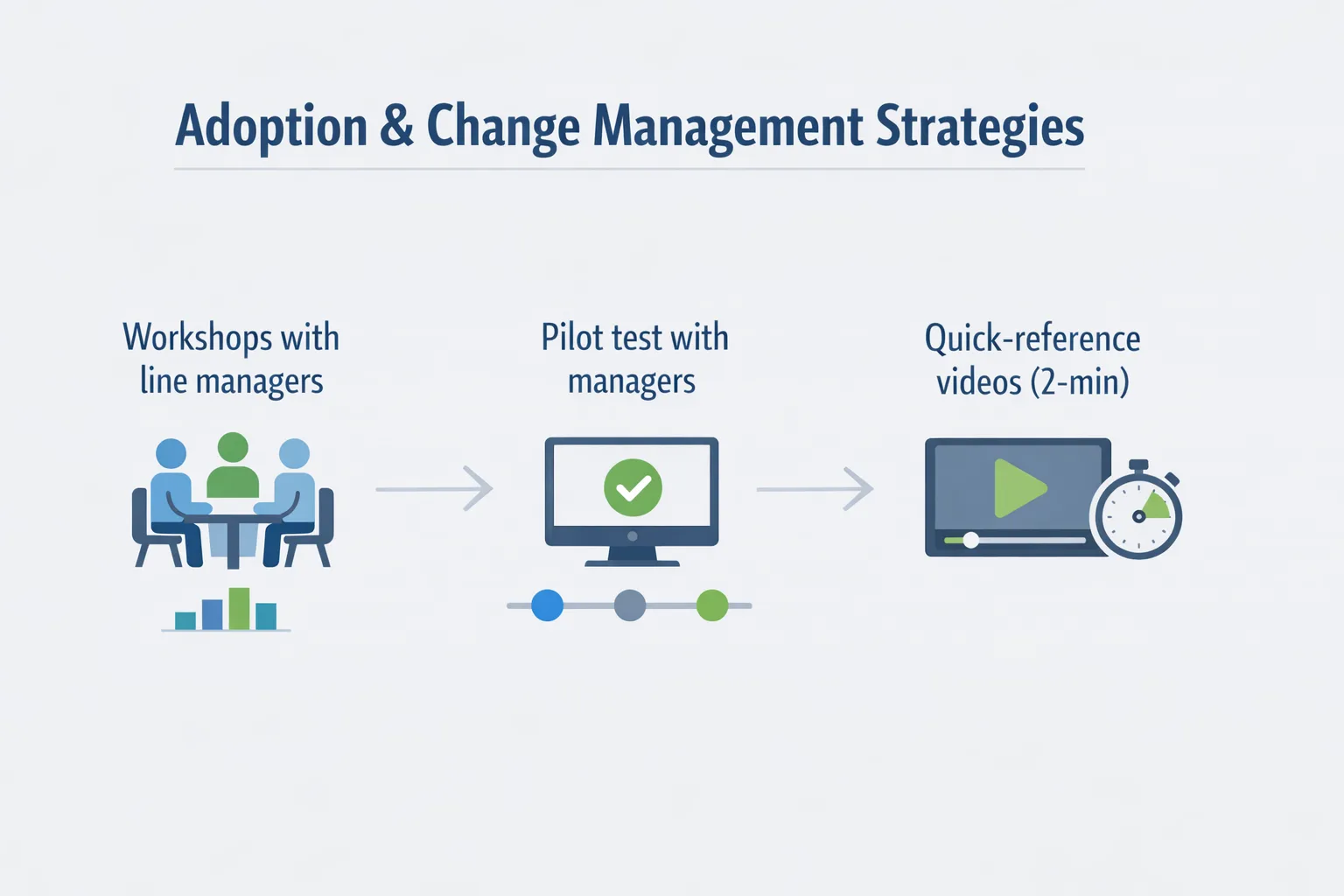
Any rollout starts with the people who will use the tool daily. Run workshops with line managers, and let them test the system before the official launch.
And create quick‑reference videos—most employees prefer a 2‑minute walkthrough to a 30‑page manual.
Phased rollout and pilot programs
Pick a single department as a pilot. Track metrics like adoption rate, error frequency, and employee satisfaction for 90 days. When the pilot hits its targets—say 85% usage and a 10% reduction in HR tickets—you scale out.
Now you have concrete data to convince the C‑suite that the investment pays off.
Real‑World Case Studies
Success story 1 AI‑driven talent acquisition
Acme Corp, a software startup, swapped its traditional ATS for an AI‑powered recruiting system. The AI screened 5,000 applicants in three months, presenting a shortlist of 150.
The company filled three senior roles 40% faster and saved $120,000 in external recruiter fees. ROI hit 180% within the first year.
Success story 2 Predictive analytics for turnover reduction
Beta Manufacturing integrated predictive analytics into its HRIS. The model flagged 200 high‑risk employees out of a workforce of 4,500.
Targeted coaching and career path discussions lowered voluntary turnover from 14% to 9% in 12 months—saving roughly $750,000 in rehiring costs.
Future Outlook & Recommendations
Preparing for the AI‑first HR landscape
The next five years will see AI embedded in almost every HR touchpoint—from onboarding to retirement planning. Leaders should start by mapping current processes and identifying where AI can add value without overcomplicating.
Now is also the time to build data governance policies that protect employee privacy while enabling insight.
Building a data‑centric HR culture
Shift the conversation from “we need more tools” to “how can we turn data into action?” Encourage managers to ask “what does this metric tell us about my team?” and reward data‑driven decisions.
And remember, technology is only as good as the people who use it—invest in upskilling your HR crew on analytics and AI basics.
Key takeaways: HR tech innovation isn’t a one‑off purchase; it’s an ongoing journey that blends AI, analytics, and cloud platforms with ethical safeguards and people‑focused change management. When you align the right tools with clear ROI metrics, empower employees through self‑service, and keep bias on the radar, you’ll stay ahead of the curve and turn your workforce into a competitive advantage.
Frequently Asked Questions
How can AI improve candidate screening in recruitment?
AI algorithms can quickly analyze resumes and match skills to job requirements, reducing manual review time. They also identify hidden patterns and bias, helping to surface a more diverse candidate pool.
What are the benefits of using HR chatbots for employee self‑service?
HR chatbots provide instant answers to routine queries like leave balance or benefits, freeing HR staff for strategic work. They operate 24/7, improve employee satisfaction, and collect interaction data for continuous improvement.
How do predictive talent analytics help reduce employee turnover?
Predictive models assess factors such as engagement scores, performance trends, and external market data to flag at‑risk employees. This enables HR to intervene with targeted retention initiatives before turnover occurs.
What should companies consider when implementing cloud‑based HR platforms?
Key considerations include data security compliance, integration with existing systems, scalability, and user adoption planning. Evaluating vendor support and total cost of ownership ensures long‑term success.
How can HR leaders measure the ROI of new HR technology investments?
ROI can be measured by tracking metrics such as time‑to‑hire reduction, administrative cost savings, employee productivity gains, and turnover decline. Comparing these outcomes against the technology’s acquisition and maintenance costs quantifies financial impact.

