

HR Tech Innovation: Transforming the Workforce with AI and Data
What Is HR Tech Innovation?
Definition and core components
HR tech innovation blends AI, cloud services, and analytics to revamp how we attract, develop, and retain talent. It isn’t just fancy software; it’s a digital transformation HR strategy that reshapes employee journeys from day one.
Key Drivers of Modern HR Tech Innovation
AI and Machine Learning
Machine learning crunches resumes faster than any recruiter could, spotting patterns that predict future performance. Think of it as your hiring assistant that never sleeps.
Cloud and SaaS platforms
Cloud‑based HR tools let you scale on demand—no more costly server upgrades. Companies like Workday and BambooHR prove that flexibility drives adoption.
Data analytics and HR dashboards
Real‑time HR dashboards turn raw data into actionable insights. You can spot turnover spikes before they become a crisis.
Hot Innovations Shaping 2025
Intelligent talent acquisition
AI sourcing platforms now rank candidates by cultural fit, while predictive hiring models cut time‑to‑fill by up to 40% (a recent case study at a fintech startup showed a 30‑day reduction).
Adaptive learning and employee development
Personalized L&D platforms deliver micro‑learning modules based on skill gaps, keeping your workforce future‑ready without massive training budgets.
People‑powered tech that blends AI with human insight
Hybrid systems let managers review AI recommendations, ensuring the human touch still matters. It’s like having an extra set of eyes that never gets biased…unless we program it that way.
Real‑World Benefits for Organizations
Faster hiring cycles
Automation shortens recruiting pipelines, and tools like SmartScreen™ let recruiters focus on relationship building.
Enhanced employee engagement
Continuous feedback loops powered by employee management software boost satisfaction scores by 12% on average.
Data‑driven decision making
Executives rely on HR dashboards to allocate budgets where they’ll impact retention the most, and the unified SmartScore™ provides a 0‑100 color‑coded hiring score for data‑driven decisions.
Implementation Best Practices
Assessing readiness and change management
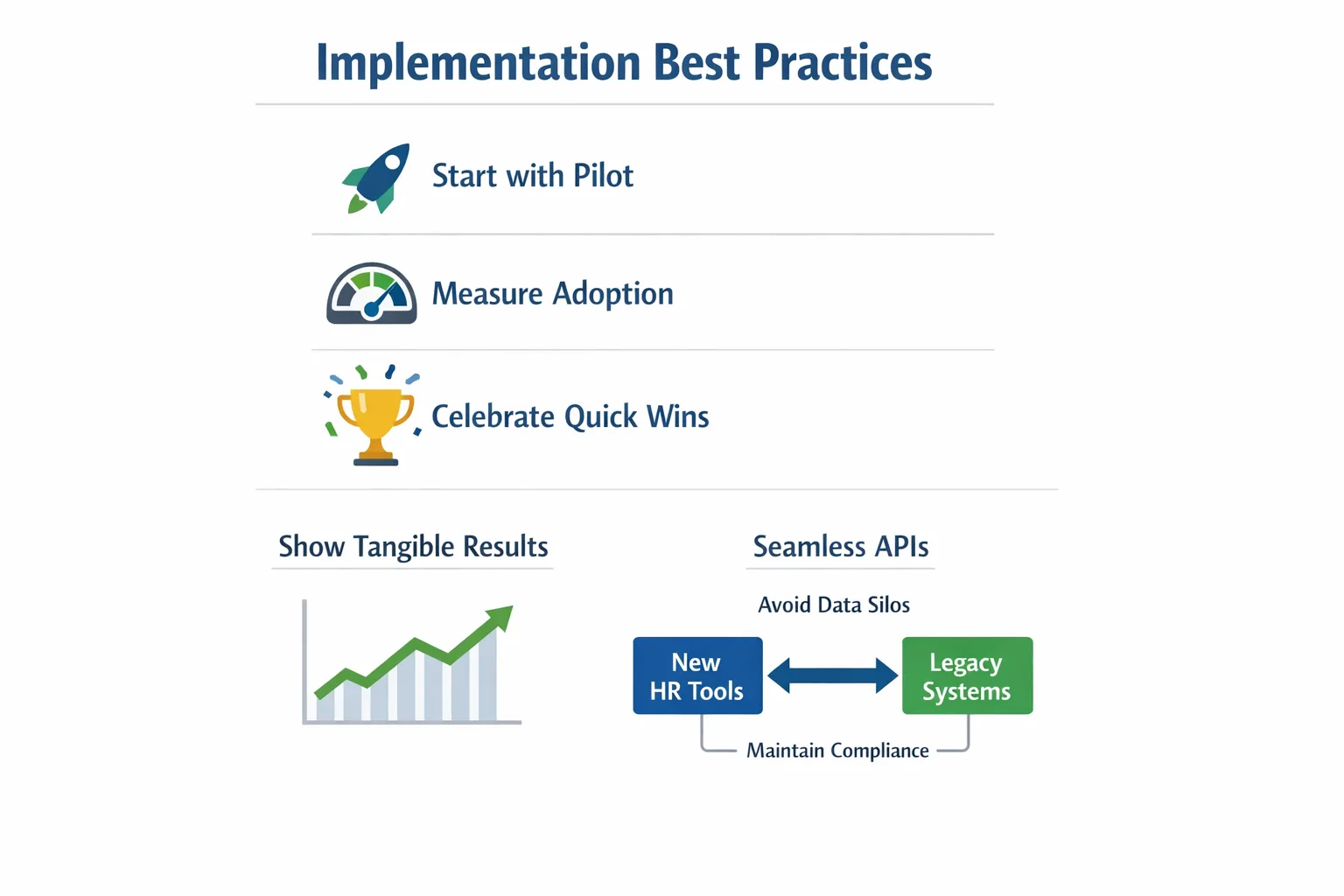
Start with a pilot, measure adoption, and celebrate quick wins. Change is easier when you show tangible results.
Integration with existing HRIS
Seamless APIs let new HR tools talk to legacy systems, avoiding data silos and keeping compliance clean.
Future Outlook What’s Next?
Generative AI for HR content creation
Imagine chatbots drafting job ads, performance reviews, or policy updates in seconds.
Continuous compliance automation
HR compliance software will auto‑update to reflect new regulations, keeping you audit‑ready without manual checks.
Missing Sections Competitors Often Omit
Ethical considerations and bias mitigation in AI HR tools
Before you deploy, run bias audits and involve diverse stakeholders. Transparency builds trust.
ROI measurement frameworks for HR tech investments
Track metrics like cost per hire, time saved, and employee churn reduction. A simple ROI model can show a 150% return over two years.
Small‑business strategies for adopting cutting‑edge HR tech
Leverage affordable SaaS HR tools, start with core functions, and scale as you grow. Even a $50/month subscription can upgrade your employee management software game.
Now you see how HR tech innovation isn’t a buzzword—it’s a tangible path to faster hiring, happier teams, and smarter decisions. Embrace the tools, mind the ethics, and watch your organization thrive.
Frequently Asked Questions
How does AI improve talent acquisition in HR tech?
AI automates resume screening, uses predictive algorithms to match candidates to job requirements, and can reduce time‑to‑hire while improving quality of hire.
What are the benefits of cloud‑based SaaS HR platforms?
Cloud‑based SaaS HR solutions provide real‑time access, automatic updates, scalability, and lower IT overhead, enabling HR teams to focus on strategy rather than maintenance.
Which data analytics tools help HR leaders make decisions?
Modern HR dashboards integrate people analytics, turnover forecasting, and engagement metrics from tools like Power BI, Tableau, or specialized platforms such as Visier, giving leaders actionable insights.
What trends are expected to dominate HR technology in 2025?
In 2025, HR tech is expected to feature intelligent sourcing, AI‑driven performance coaching, hyper‑personalized L&D, and seamless integration of employee data across unified cloud ecosystems.
How can adaptive learning platforms personalize employee development?
Adaptive learning platforms use machine learning to assess skill gaps, curate customized content, and adjust learning paths in real time, boosting engagement and skill retention for each employee.

