

The Ultimate Onboarding Process Guide: Steps to Seamless New‑Hire Integration
Introduction to the Onboarding Process
Welcome to the playbook that turns first‑day jitters into day‑one confidence. The onboarding process is more than paperwork; it’s the bridge between a fresh contract and a productive teammate. In the first 100 words we’ll answer why you need a roadmap, and by the end you’ll have a printable checklist you can roll out tomorrow.
Why onboarding matters – retention, productivity, culture
Did you know that 69% of employees quit within the first year if they feel unsupported? A well‑crafted onboarding process can lift retention by up to 25% and shave 40% off ramp‑up time. It also embeds culture before habits form. When new hires see the company’s values in action on day one, they’re more likely to stay, collaborate, and champion the brand.
Pre‑boarding – Setting the Stage Before Day One
Think of pre‑boarding as the warm‑up before the big game. You’re not just sending a welcome email; you’re laying the groundwork for a smooth first day.
Welcome communication & paperwork
Start with a friendly email that includes a brief intro video, a link to the employee handbook, and a digital signature request for tax forms. According to a 2023 HR survey, 82% of new hires who receive a personalized welcome note report higher job satisfaction.
IT setup and access provisioning
Before the new hire steps through the door, have their laptop, email account, and necessary software ready. A simple checklist—email, VPN, Slack, and the LMS—cuts average IT wait time from 3 days to under 4 hours. Pro tip: automate provisioning and the full onboarding workflow with SmartOnboard™ to avoid manual errors.
First‑day agenda preview
Send a tidy agenda that shows who they’ll meet, when lunch is, and which training modules are slated for week one. A clear schedule reduces anxiety; think of it as the GPS for their first week.
Day One: First Impressions
Day one is your chance to wow them.
Formal orientation and company overview
Kick off with a 30‑minute orientation that covers mission, vision, and core values. Include a quick demo of the company’s flagship product—seeing it in action fuels excitement.
Team introductions and buddy assignment
Introduce the new hire to the team within the first hour. Pair them with a seasoned buddy who can answer the “Where’s the coffee?” questions and help decode the office slang. Studies show that buddy programs boost early engagement by 15%.
The First 30‑Days: Building Foundations
Now the real learning begins.
Role‑specific training and resources
Map out a learning path that blends e‑learning modules, on‑the‑job shadowing, and short quizzes. For instance, a sales rep might spend 10 hours on product demos, 5 hours on CRM training, and 2 hours on role‑play. Use your LMS to track progress and send gentle nudges.
Goal setting and performance expectations
Within the first week, sit down for a 45‑minute goal‑setting session. Define three SMART objectives for the first month and link them to broader team metrics. Clear goals keep the new hire focused and give you a baseline for future check‑ins.
Regular check‑ins and feedback loops
Schedule brief 15‑minute catch‑ups every Monday for the first four weeks. Ask open‑ended questions like “What’s been the biggest surprise so far?” and listen. Quick feedback loops catch confusion before it snowballs.
The 60‑ and 90‑Day Milestones
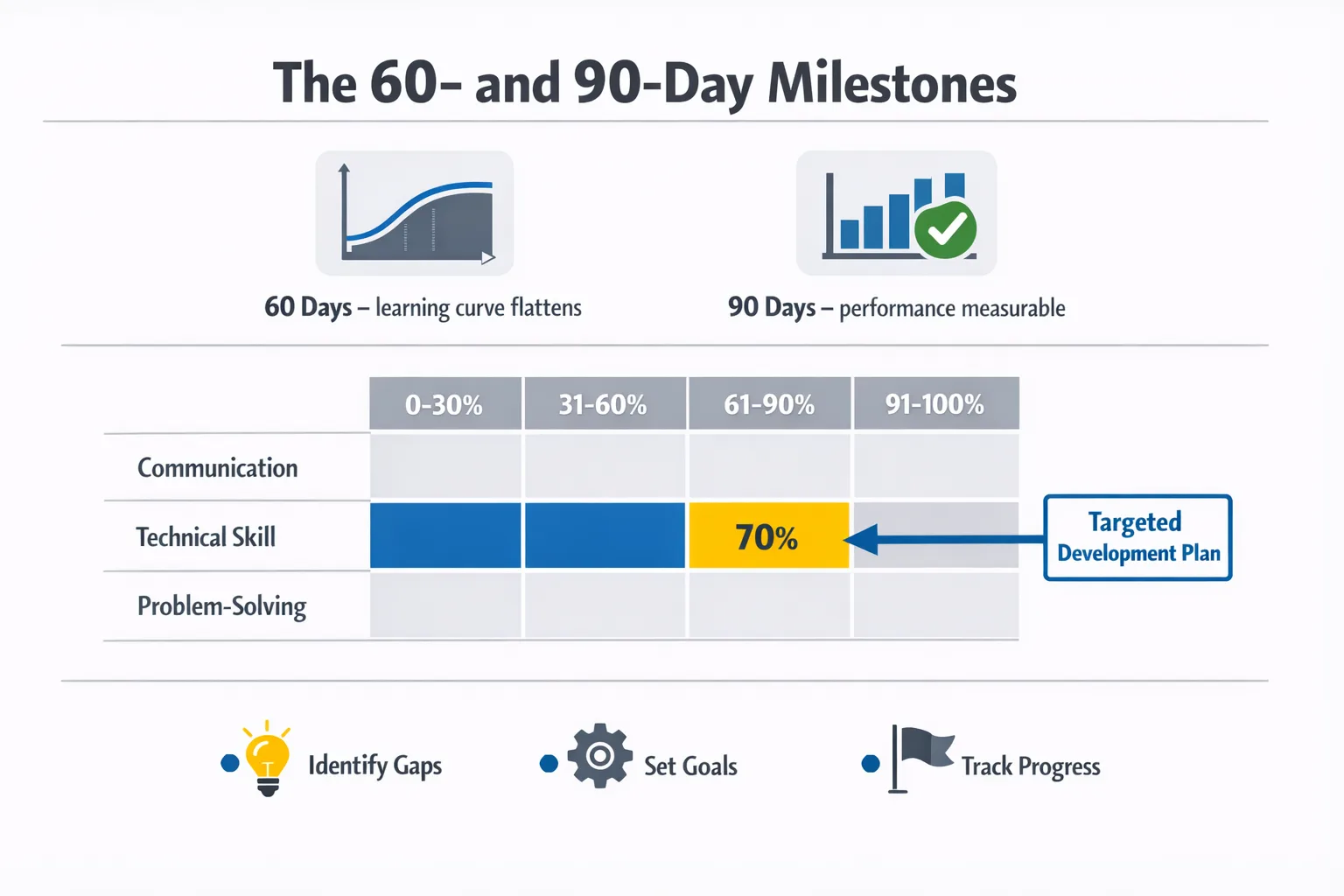
At two months, the learning curve starts to flatten; at three months, performance should be measurable.
Skills assessment and development plans
Use a competency matrix to rate proficiency in key areas—communication, technical skill, and problem‑solving. If a new hire scores 70% in a critical skill, craft a targeted development plan with a mix of coaching and micro‑learning.
Formal performance review
Conduct a 60‑minute review that blends self‑assessment, manager feedback, and peer input. Highlight wins, outline improvement areas, and adjust goals for the next quarter. This formal touch signals that the company invests in growth.
Adjustments and continuous improvement
After the review, ask the new hire what could be better in the onboarding process itself. Use that intel to tweak the timeline, add resources, or streamline paperwork for the next cohort.
Essential Tools & Technology
Technology can make or break the onboarding experience.
Employee onboarding software platforms
Platforms like BambooHR, Workday, and ClickUp let you automate forms, track task completion, and generate analytics dashboards. A midsize firm that switched to an onboarding platform saw a 30% reduction in time‑to‑productivity.
Learning management systems (LMS)
An LMS centralizes training content, quizzes, and certification tracking. Pair it with your onboarding software and you’ll have a single source of truth for every new hire’s progress.
Measuring Success – Onboarding Metrics
You can’t improve what you don’t measure.
Time‑to‑productivity, retention rates, NPS
Track how many weeks it takes a new hire to meet their first performance goal (time‑to‑productivity). Compare retention at 6 months versus a control group. Another powerful indicator is the onboarding Net Promoter Score—ask, “How likely are you to recommend our onboarding to a friend?” and watch the score move over time.
Survey templates and data analysis
Deploy a short survey at day 5, day 30, and day 90 with SmartFeedback™ to capture insights automatically. Include Likert‑scale questions on clarity of expectations, access to tools, and cultural fit. Export the data to Excel or Google Data Studio for trend analysis. Over a year, you’ll spot patterns and know exactly where to tweak.
Common Pitfalls and How to Avoid Them
Even the best‑intentioned programs stumble.
Overloading information, lack of social integration
Don’t dump 20 training videos on day one. Space learning over weeks and sprinkle in social events—virtual coffee chats, lunch‑and‑learns, or team building games. When you blend knowledge with connection, onboarding feels human, not a checklist.
Advanced Topics Not Covered by Most Competitors
Remote & hybrid onboarding strategies
Remote hires need extra touchpoints. Send a welcome box with swag, a handwritten note, and a QR code that links to a virtual office tour. Use video calls for introductions, and set up a “virtual watercooler” channel on Slack for casual chats. Hybrid employees benefit from a blended schedule—first week remote, second week onsite—to build relationships without a long commute.
Legal & compliance checkpoints
Compliance isn’t optional. Include I‑9 verification, safety training, and data‑privacy briefings in the first two weeks. A simple compliance checklist—tax forms, confidentiality agreement, cybersecurity policy—keeps HR audits clean and protects the company from costly fines.
Cultural assimilation and DEI integration
Embed diversity, equity, and inclusion early. Share a DEI playbook, assign a mentor from a different background, and schedule a lunch with the ERG (Employee Resource Group) leader. When new hires see DEI lived out, they feel valued from day one.
Quick-Start Checklist & Templates
Grab and go—no more reinventing the wheel.
Printable onboarding timeline
- Day ‑7: Send welcome email, ship laptop, share digital forms.
- Day 0: Formal orientation, office tour (or virtual tour), buddy intro.
- Week 1: Role‑specific training modules, first goal‑setting meeting.
- Week 2: Check‑in call, feedback survey, compliance training.
- Month 1: Review of first 30‑day objectives, adjust plan.
- Month 2: Skills assessment, development plan draft.
- Month 3: Formal performance review, NPS survey, onboarding debrief.
Sample welcome email and agenda
Subject: Welcome to the Team, Alex! 🎉
Hi Alex,
We’re thrilled you’re joining our marketing squad. Your laptop is on its way, and you’ll find a link below to complete your tax forms. Here’s a sneak peek at your first‑day agenda:
9:00 am – Coffee & Meet Your Buddy
9:30 am – Company Overview & Values
10:15 am – IT Setup
11:00 am – Team Introductions
12:00 pm – Lunch (we’ll order your favorite)
1:00 pm – Role‑Specific Training Kickoff
3:00 pm – Q&A and Next Steps
Looking forward to seeing you on Monday!
— The People Team
Wrapping Up
There you have it—a full‑cycle onboarding process that covers pre‑boarding, day one, the first 30 days, and the critical 60‑ and 90‑day milestones. By embracing the right technology, measuring the right metrics, and tailoring experiences for remote or hybrid hires, you turn a simple paperwork sprint into a strategic retention strategy. Grab the checklist, customize the templates, and start shaping new‑hire journeys that boost productivity, engage employees, and reinforce your culture. Your next great hire is just a well‑designed onboarding process away.
Frequently Asked Questions
What are the key components of an effective onboarding checklist?
A solid onboarding checklist includes pre‑boarding tasks, first‑day welcome activities, role‑specific training, cultural immersion, and regular check‑ins during the first 90 days. It should also cover compliance paperwork, IT setup, and clear performance expectations.
How long should the onboarding process last for new hires?
While the first day and first week are critical, most experts recommend a structured onboarding program that spans 30 to 90 days. This timeline allows new employees to grasp company culture, build relationships, and achieve initial performance milestones.
What metrics should I track to measure onboarding success?
Track time‑to‑productivity, new‑hire retention rates at 30, 60, and 90 days, employee engagement scores, and completion rates of required training modules. Combining quantitative data with qualitative feedback gives a full picture of the program’s effectiveness.
How can remote employees be onboarded effectively?
Provide digital welcome kits, schedule virtual introductions with the team, and ensure all IT tools are pre‑configured and delivered ahead of day one. Regular video check‑ins and a dedicated mentor help replicate the in‑office experience and foster engagement.
Where can I find templates for onboarding paperwork and schedules?
Many HR platforms offer free downloadable templates for offer letters, NDA forms, equipment checklists, and 30‑60‑90 day plans. You can also customize generic templates from reputable HR blogs or professional associations to match your company’s branding.

